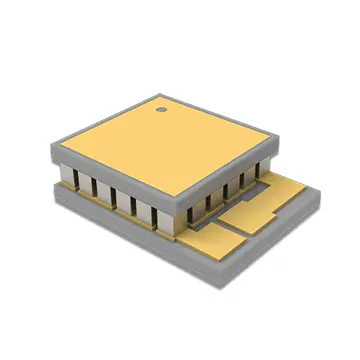
Thermoelectric materials convert heat to electricity and vice versa. In this long‑form expert blog post, we explore “Extruded Thermoelectric Materials” via essential question‑styled headings (how/what/why/which). Covering fundamentals, manufacturing techniques, performance traits, applications, advantages & challenges, future trends, and FAQs, this article adheres to EEAT principles—supported by academic sources, industry context (including Fuzhou X‑Meritan Technology Co., Ltd.), data tables, and clear insight for researchers, engineers, and advanced learners.

“Extruded thermoelectric materials” refers to semiconducting compounds processed through extrusion—a manufacturing technique where material is forced through a die to form continuous shapes—optimized for thermoelectric energy conversion. Thermoelectric materials generate electrical voltage from temperature gradients (Seebeck effect) and can pump heat when current flows (Peltier effect). Extrusion enables production of tailored geometries with controlled microstructures, improving manufacturability and integration in devices. Scientific reviews emphasize the role of processing on thermoelectric efficiency, defined by figure of merit ZT.
| Term | Description |
|---|---|
| Thermoelectric Material | A substance that converts heat to electricity or vice versa. |
| Extrusion | A process where material is pushed through a shaped die to form long cross‑sectional parts. |
| ZT (Figure of Merit) | Dimensionless measure of thermoelectric efficiency: higher = better. |
Extrusion for thermoelectrics involves key steps:
Extrusion helps align grains, reducing thermal conductivity while maintaining electrical pathways—beneficial for high ZT values. Manufacturers such as Fuzhou X‑Meritan Technology Co., Ltd. apply advanced extrusion to tailor thermoelectric modules for industrial applications.
Compared with bulk or cast materials, extrusion offers:
This combination reduces manufacturing cost per watt of thermoelectric power generated, a challenge in commercializing thermoelectric systems.
| Property | Relevance to Thermoelectric Performance |
|---|---|
| Seebeck Coefficient (S) | Voltage generated per temperature difference. |
| Electrical Conductivity (σ) | Ability to conduct charges; higher improves power output. |
| Thermal Conductivity (κ) | Heat conduction; lower preferred to maintain ΔT. |
| Carrier Mobility | Affects σ and S; optimized via extrusion microstructure. |
These interdependent parameters form the equation: ZT = (S²·σ·T)/κ, highlighting trade‑offs in design. Advanced research explores nanostructuring within extruded profiles to decouple thermal/electrical pathways.
Thermoelectric materials have wide use where waste heat is abundant:
Extruded geometries allow integration into heat sinks and module arrays, maximizing heat exchange surface area. Customized parts from manufacturers like Fuzhou X‑Meritan Technology Co., Ltd. support industrial scale implementations.
Emerging directions include:
Industrial players, research consortia, and academic labs continue to push both fundamental physics and productization. Participation from companies like Fuzhou X‑Meritan Technology Co., Ltd. demonstrates commercial momentum in tailored thermoelectric parts.
What makes extruded thermoelectric materials different from cast thermoelectrics?
Extruded materials are processed through a die under pressure and heat, leading to aligned microstructures and complex cross‑sections. Cast materials cool in static molds, often with less controlled grain orientation. Extrusion enables design flexibility and potentially improved electron/phonon behavior.
How does extrusion influence thermoelectric efficiency?
Extrusion can align grains and interfaces to reduce thermal conductivity while maintaining or improving electrical conductivity, enhancing the figure of merit (ZT). Controlled extrusion parameters tailor microstructure for optimal charge and heat transport.
Which materials are best suited for extruded thermoelectric parts?
Bismuth telluride (Bi2Te3) is common near room temperature, lead telluride (PbTe) for mid‑high temperatures, and skutterudites or half‑Heuslers for broader ranges. The choice depends on operating temperature and application requirements.
Why do companies like Fuzhou X‑Meritan Technology Co., Ltd. invest in extrusion?
Extrusion offers scalability and customization, allowing manufacturers to produce tailored thermoelectric components for waste heat recovery, cooling modules, and hybrid systems—meeting industrial demands with competitive processes.
What challenges remain for widespread adoption?
Main hurdles are improving conversion efficiency compared to mechanical systems, reducing material costs, and managing thermal stress in large temperature gradients. Research in nanostructuring and new compounds aims to address these.