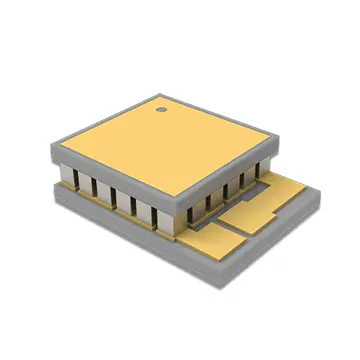
In the early 19th century in Somme, France, a watchmaker named Jean-Charles Peltier (referred to as Peltier for short) calibrated the scales of countless hours with precise gears. However, when he put down the file and vernier caliper at the age of 30 and instead picked up the prism and the current meter, the intersection of his life path and the history of science was thus born - this former craftsman will be engraved on the milestone of thermoelectric physics as the discoverer of the "Peltier effect".

Peltier's transformation was no accident. His career as a watchmaker endowed him with the acuity and patience to observe the microscopic world, while his obsession with natural phenomena was surging like an undercurrent. From recording the subtle fluctuations of celestial electricity to measuring the abnormal data of polar boiling points; From studying the vortex structure of tornadoes to capturing the blue code of the sky with polarized light, his papers are like a naturalist's notebook, covering the fringes of physics, meteorology and even optics. This spirit of cross-border exploration eventually bore fruit in 1834: when he passed current through the contact point between copper wire and bismuth wire, the unexpected heat absorption phenomenon revealed a new law of thermoelectric conversion - the Pellier effect, laying the groundwork for semiconductor cooling technology in later generations.
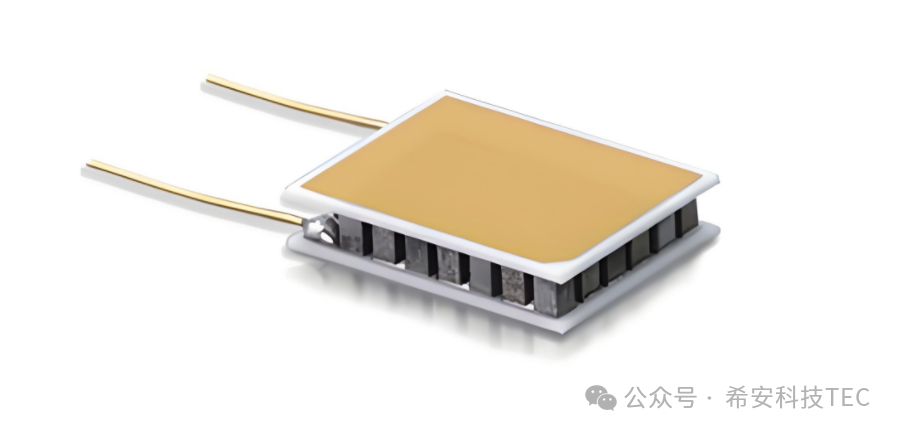
His story proves that science never rejects awakened souls. When the precision of a watchmaker meets the curiosity of a naturalist, the spark is enough to illuminate the dark corners of human cognition. However, due to the limited application effects of early metal materials, it was not until the development of semiconductor technology in the 20th century that industrial application was achieved.
The story is over. Here's the key point
Q: What is the Peltier effect?
A: When current passes through A circuit composed of two different conductors or semiconductors, heat absorption or release will occur at the contact point of the two materials due to the different directions of the current. This is a process of electrothermal conversion and the reverse process of the Seebeck effect.
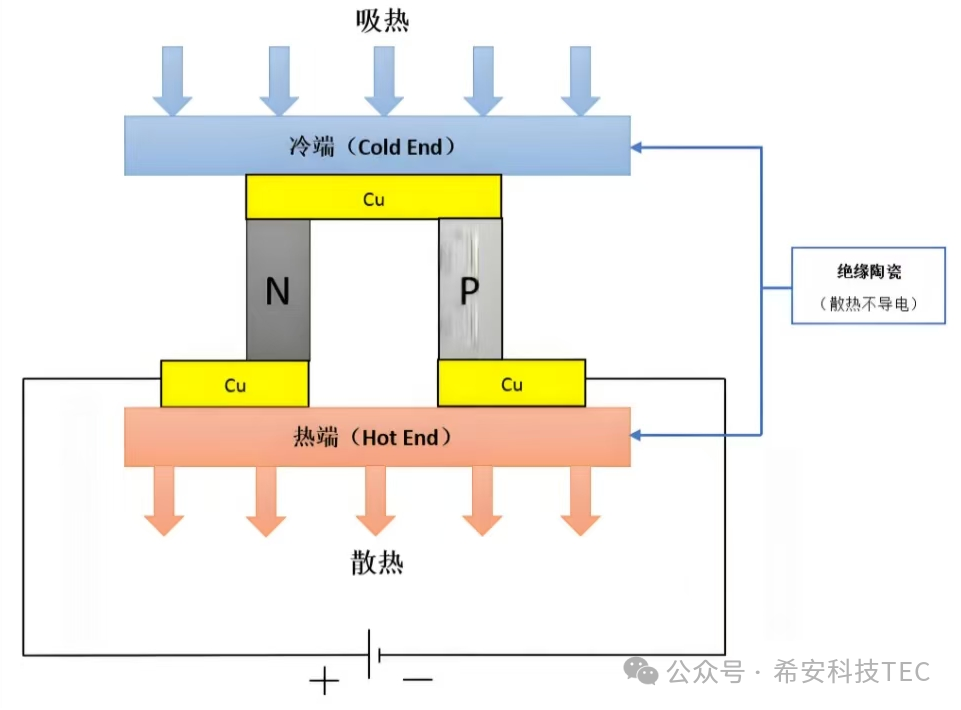
Q: What are the application scenarios of the Peltier effect?
A: The main application scenarios include optical modules, data centers, medical equipment, automotive devices, and consumer-related products (such as mobile phone heat dissipation back clips, hair removal devices, etc.)

X-Meritan is a professional manufacturer and supplier of Thermoelectric Materials, Thermoelectric Coolers and Thermoelectric Coolers Assemblies in China. Welcome to consult and purchase.