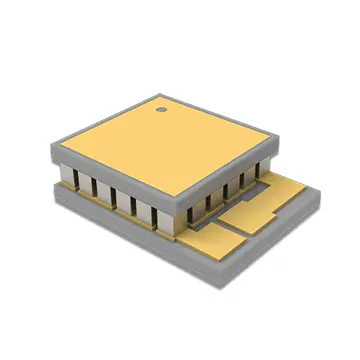
An apple shattered Newton's thoughts on universal gravitation. Then, who found the key to unlock the world of thermoelectricity? Let's step into the development history of TEC and the world of thermoelectricity.
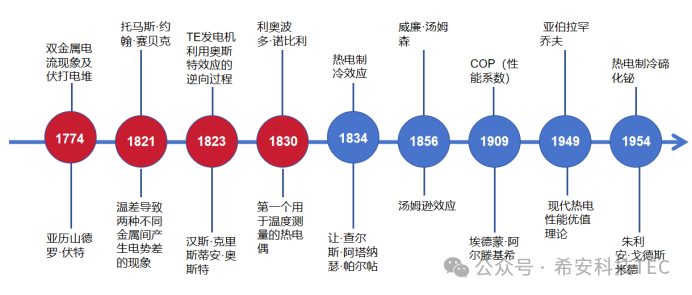
Among so many famous people in the brief history of the thermoelectric field, there is one person we cannot avoid - Thomas John Seebeck. So, what exactly did he do that makes us thermoelectric people remember him?
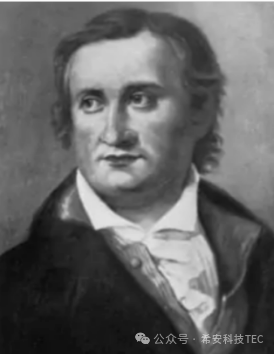
Thomas Johann Seebeck (German: Thomas Johann Seebeck, April 9, 1770 - December 10, 1831) was born in Tallinn in 1770 (then part of East Prussia and now the capital of Estonia). Seebeck's father was a German of Swedish descent. Perhaps for this reason, he encouraged his son to study medicine at the University of Berlin and the University of Gottingen, where he had once studied. In 1802, Seebeck obtained a medical degree. Because the direction he chose was physics in experimental medicine and he spent most of his life engaged in education and research in physics, he is generally regarded as a physicist.
In 1821, Seebeck connected two different metal wires together to form an electric current circuit. He connected two wires end to end to form a node. Suddenly, he discovered that if one of the nodes was heated to a very high temperature while the other was kept at a low temperature, there would be a magnetic field around the circuit. He simply couldn't believe that when heat was applied to a junction formed by two metals, an electric current would be generated. This could only be explained by thermomagnetic current or thermomagnetic phenomenon. Over the next two years (1822-1823), Seebeck reported his continuous observations to the Prussian Scientific Society, describing this discovery as "metal magnetization caused by temperature differences".
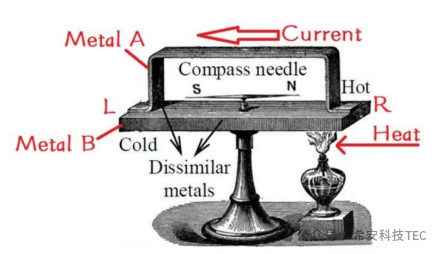
Seebeck did indeed discover the thermoelectric effect, but he made a wrong explanation: the reason for the magnetic field generated around the wire was that the temperature gradient magnetized the metal in a certain direction, rather than the formation of an electric current. The scientific society believes that this phenomenon is due to the temperature gradient causing an electric current, which in turn generates a magnetic field around the wire. Seebeck was extremely angry at such an explanation. He retorted that the scientists' eyes were blinded by Oersted's (the pioneer of electromagnetism) experience, so they could only explain it with the theory that "magnetic fields are produced by electric current", and did not think of any other explanations. However, Seebeck himself found it difficult to explain the fact that if the circuit was cut off, the temperature gradient did not generate a magnetic field around the wire. It was not until 1823 that the Danish physicist Oersted pointed out that this was a phenomenon of thermoelectric conversion, and thus it was officially named. The Seebeck effect was thus born. This revision reflects the significance of collaborative verification within the scientific community.
After reading the story, here's the key point!
Q: What is the Seebeck effect?
A: Seebeck effect: When two different conductors or semiconductors form a closed circuit, if there is a temperature difference at the two contact points, an electromotive force (referred to as thermoelectric potential) will be generated in the circuit, thereby forming a current. Its direction depends on the direction of the temperature gradient, and the hot end electrons usually migrate from negative to positive.
Q: What are the application scenarios of the Seebeck effect?
A: Application scenarios of the Seebeck effect: power generation systems for equipment in the aerospace field, fireplace power generation systems, oven power generation systems, etc.