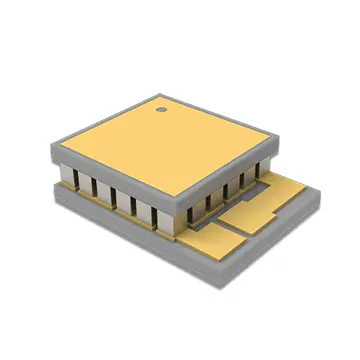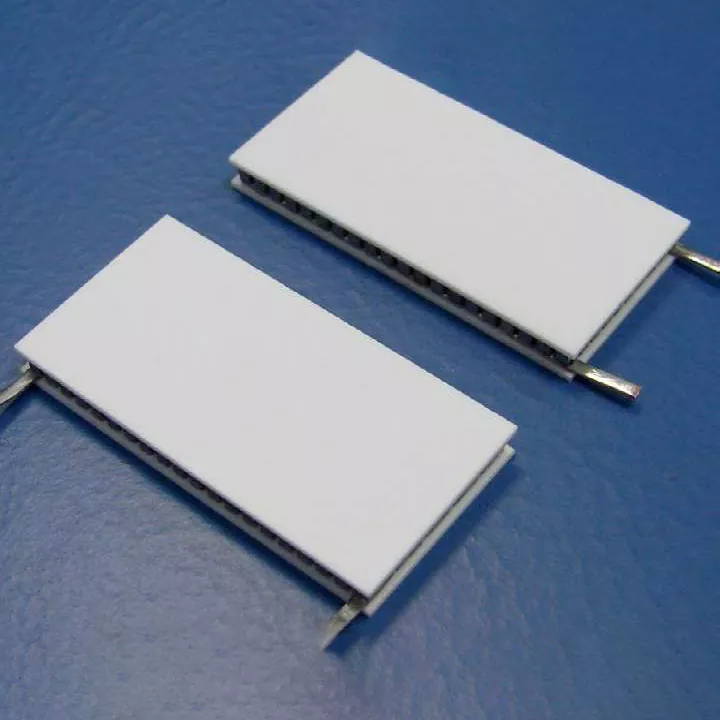
X-Meritan is a leading supplier of Standard Cycling Thermoelectric Coolers for PCR in China. We offer professional service and competitive pricing. If you are interested in any of our products, please contact us. We adhere to the principles of quality assurance, competitive pricing, and dedicated service.
At X-Meritan in China, we have successfully developed Standard Cycling Thermoelectric Coolers for PCR by deeply integrating high-performance materials with unique production processes. These coolers can effectively resist thermal stress damage, thereby significantly extending service life and improving operational efficiency.
Thermoelectric coolers can indeed be used for very effective and efficient heating. Since thermoelectric coolers are solid-state heat pumps, they can actively pump heat from the ambient in addition to the heating effect that comes from the electrical resistance of the cooler itself. So, the thermoelectric cooler can be more efficient than a resistive heater (within limits). The heating can be so effective that you could very easily cause the module to reach the melting point of the solder! Care must be taken to ensure that the module does not overheat.
If you are interested in using one of our standard cooling assemblies for a cooling and/or heating application, please consult with us to determine which assembly would work best.
1、Ideally, thermoelectric coolers should operate on purely direct current for the best performance. However, a ripple factor of 10% will only result in 1% degradation in temperature difference. Most power supplies have better filtering than that, so ripple is not likely to be a concern.
2、 Care should be taken not to overpower the cooler. Overpowering the cooler could lead to inadvertently exceeding the temperature ratings and causing damage to the cooler.
3、The input power for maximum efficiency of a cooler does not correspond to its maximum operating voltage and current. When maximum efficiency is desired, the applied power should be typically 1/3 to 2/3 of the Vmax and Imax specifications of the module(s) used in the assembly.
4、If a temperature controller is used, it should be of the linear type or the pulse-width-modulated (PWM) type to minimize any detrimental effects of temperature cycling. Care should be taken to use a PWM frequency that is fast enough so that no thermal cycling is induced within the device. TE Technology’s controllers use a frequency range from approximately 300 Hz to 3,000 Hz.How big or small can a thermoelectric cooler be?There are practical limits to the individual sizes of a module or cooling assembly. Micro-modules, for example, are more expensive to produce because they are less suitable for automated processing. Forlarger modules, coefficients of thermal expansion and costs tend to limit thermoelectric modules to within a certain physical footprint.
For cooling assemblies, the minimum size might be limited by the minimum requirements needed to provide sufficient heat sinking. The maximum size is limited by the requirements of the mounting plates. If the plates get too large, then it becomes too difficult to maintain sufficient surface flatness. Generally, when more cooling capacity is required than what the typically largest size cooler can provide, multiple coolers are used rather than using one giant cooler. Approximately speaking, the largest individual cooler has a footprint of approximately 254 mm x 177 mm, such as our standard CP-200. There are always exceptions though; these are just general guidelines.