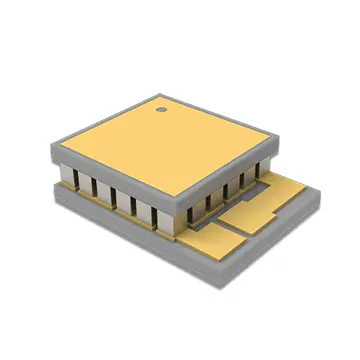
In the development history of refrigeration technology, semiconductor coolers, with their unique advantages, are quietly changing people's perception of "refrigeration". It does not have the roar of traditional compressors and does not require a complex refrigerant circulation system. Just by taking advantage of the characteristics of semiconductor materials, it can achieve the magical effect of "cooling and heating at the same time", and has emerged in more and more scenarios, becoming a niche but highly potential refrigeration solution.
I. The Mystery of "Noise-free Refrigeration" : The Working Principle of Semiconductor Coolers
The core of the semiconductor cooler originated from the "Peltier effect" discovered by the French physicist Jean Peltier in 1834. When two different semiconductor materials (usually N-type and P-type) form a thermocouple pair and a direct current is applied, one end of the thermocouple pair absorbs heat while the other end releases heat, creating a temperature difference. This method of directly achieving "heat transfer" through electrical energy, which does not rely on the phase change of the refrigerant and has no mechanical moving parts, is precisely the key difference from traditional compressor refrigeration.
Structurally speaking, semiconductor coolers are typically composed of multiple sets of semiconductor couples, ceramic substrates and electrodes. Ceramic substrates have both excellent thermal conductivity and insulation properties. They can not only quickly transfer heat but also prevent short circuits in circuits. Multiple pairs of thermocouples can be arranged in series or parallel. By adjusting the number of pairs and the magnitude of the current passed through, the cooling capacity and temperature difference can be precisely controlled. When the direction of the current changes, the cooling end and the heating end will also switch accordingly. This feature enables it to both cool and heat, achieving "dual use in one machine".
Compared with traditional compressor refrigeration, the principle of semiconductor refrigerators seems simple, but it brings revolutionary advantages: there is no noise generated by the operation of compressors, and the noise during operation can be as low as below 30 decibels, approaching the ambient sound. Compact in size, the smallest semiconductor cooling module is only a few cubic centimeters, making it easy to embed in small devices. It is lightweight, usually only 1/5 to 1/3 of traditional refrigeration components, making it highly suitable for portable scenarios. And it does not use refrigerants such as Freon, which is environmentally friendly and in line with the trend of green environmental protection.
Ii. Scenario-based Penetration: The "Application Stage" of Semiconductor Coolers
With the features of "small, quiet and green", semiconductor coolers play a significant role in scenarios where traditional refrigeration technologies are difficult to cover. Their application scope is constantly expanding, from consumer electronics to industrial production and even to medical and health care.
In the field of consumer electronics, semiconductor coolers have become powerful tools for "precise temperature control". Today's gaming phones and high-performance tablets tend to heat up when running large programs, which affects their performance and service life. The built-in semiconductor cooling module can quickly transfer the heat from the core components to the outside of the body, achieving "local cooling" and keeping the device running efficiently continuously. In addition, mini refrigerators and car cooling cups are also typical applications of semiconductor coolers. These products are compact in size, do not require complex external pipelines, and can quickly cool when plugged in, meeting people's cooling needs in small Spaces such as offices and cars. Moreover, they operate with almost no noise and will not disturb work or rest.
In the industrial and scientific research fields, semiconductor coolers, with their advantage of "strong controllability", have become "stable assistants" in experiments and production. In the manufacturing of precision instruments, some optical components and sensors are extremely sensitive to temperature changes. Even a tiny temperature difference can affect measurement accuracy. Semiconductor coolers can control temperature fluctuations within ±0.1℃ through a closed-loop temperature control system, providing a stable working environment for the equipment. In scientific research experiments, such as the short-term preservation of biological samples and the constant temperature control of chemical reactions, semiconductor coolers do not occupy a large amount of space and can quickly achieve the target temperature, greatly improving the efficiency of experiments.
In the field of medical and health care, the "safe and environmentally friendly" features of semiconductor coolers have made them highly favored. In portable medical devices such as insulin refrigerated boxes and vaccine transfer boxes, semiconductor coolers do not require refrigerants, avoiding the potential leakage risks of traditional refrigeration equipment. At the same time, they can maintain low temperatures through insulation layers after power failure, ensuring the safety of drugs during transportation and storage. In addition, in some local cooling treatment scenarios, such as physical cooling patches and postoperative local cold compress devices, semiconductor coolers can precisely control the cooling area and temperature, avoiding any impact on the surrounding normal tissues and enhancing the comfort and safety of the treatment.
Iii. Opportunities and Challenges Coexist: The Development Path of Semiconductor Coolers
Although semiconductor coolers have significant advantages, due to their technical characteristics, there are still some bottlenecks that need to be urgently broken through at present. Firstly, the energy efficiency ratio is relatively low - compared with traditional compressor refrigeration, when semiconductor refrigerators consume the same amount of electrical energy, they transfer less heat. Especially in scenarios with large temperature differences (such as a temperature difference between the refrigeration end and the environment exceeding 50℃), the energy efficiency performance gap is more obvious. This makes it temporarily difficult to apply to scenarios that require large-scale refrigeration, such as household air conditioners and large cold storage facilities. Secondly, there is the issue of heat dissipation - while the semiconductor cooler is cooling, a large amount of heat is generated at the heating end. If this heat cannot be dissipated in time, it will not only reduce the cooling efficiency but also may damage the module due to excessive temperature. Therefore, an efficient heat dissipation system (such as cooling fans and heat sinks) is needed, which to some extent increases the volume and cost of the product.
However, with the advancement of material technology and refrigeration processes, the development of semiconductor coolers is embracing new opportunities. In terms of materials, researchers have been developing new semiconductor materials (such as bismuth telluride based composites, oxide semiconductors, etc.) to continuously enhance the thermoelectric conversion efficiency of materials, which is expected to significantly increase the energy efficiency ratio of semiconductor coolers in the future. In terms of craftsmanship, the development of miniaturization and integration technologies has enabled semiconductor cooling modules to be more closely integrated with chips, sensors and other components, further reducing their size and expanding their application in micro-devices. In addition, "integrated innovation" with other refrigeration technologies has also become a new trend - for instance, combining semiconductor refrigeration with phase change energy storage technology, using phase change materials to absorb heat from the heating end, and reducing the burden on the heat dissipation system; Or it can be combined with traditional compressor refrigeration to achieve "precise supplementary cooling" in local areas, thereby enhancing the efficiency of the overall refrigeration system.
Iv. Conclusion: Small Modules Drive a Big Market: The "differentiation" Power of Refrigeration Technology
Semiconductor coolers may not be "all-in-one" refrigeration solutions, but with their unique technical features, they have opened up new horizons in niche areas that traditional refrigeration technologies find hard to reach. From the "silent cooling" of consumer electronics to the "safe temperature control" of medical equipment, and then to the "precise constant temperature" of industrial research, it has met people's diversified demands for refrigeration with its "small but beautiful" advantages.
With continuous technological breakthroughs, issues such as energy efficiency and heat dissipation of semiconductor coolers will gradually be resolved, and their application scenarios will also shift from "niche" to "mass". In the future, we may see more products equipped with semiconductor refrigeration technology - smart wearable devices that can cool down quickly and noiselessly, small household refrigerators that do not require refrigerants, and smart home systems that can precisely control temperature... This "cold and hot magic" within a small space is driving refrigeration technology towards a more efficient, environmentally friendly and intelligent future with the power of "differentiation".